All categories

Holocaust and Nazi Persecution Victims and Survivors

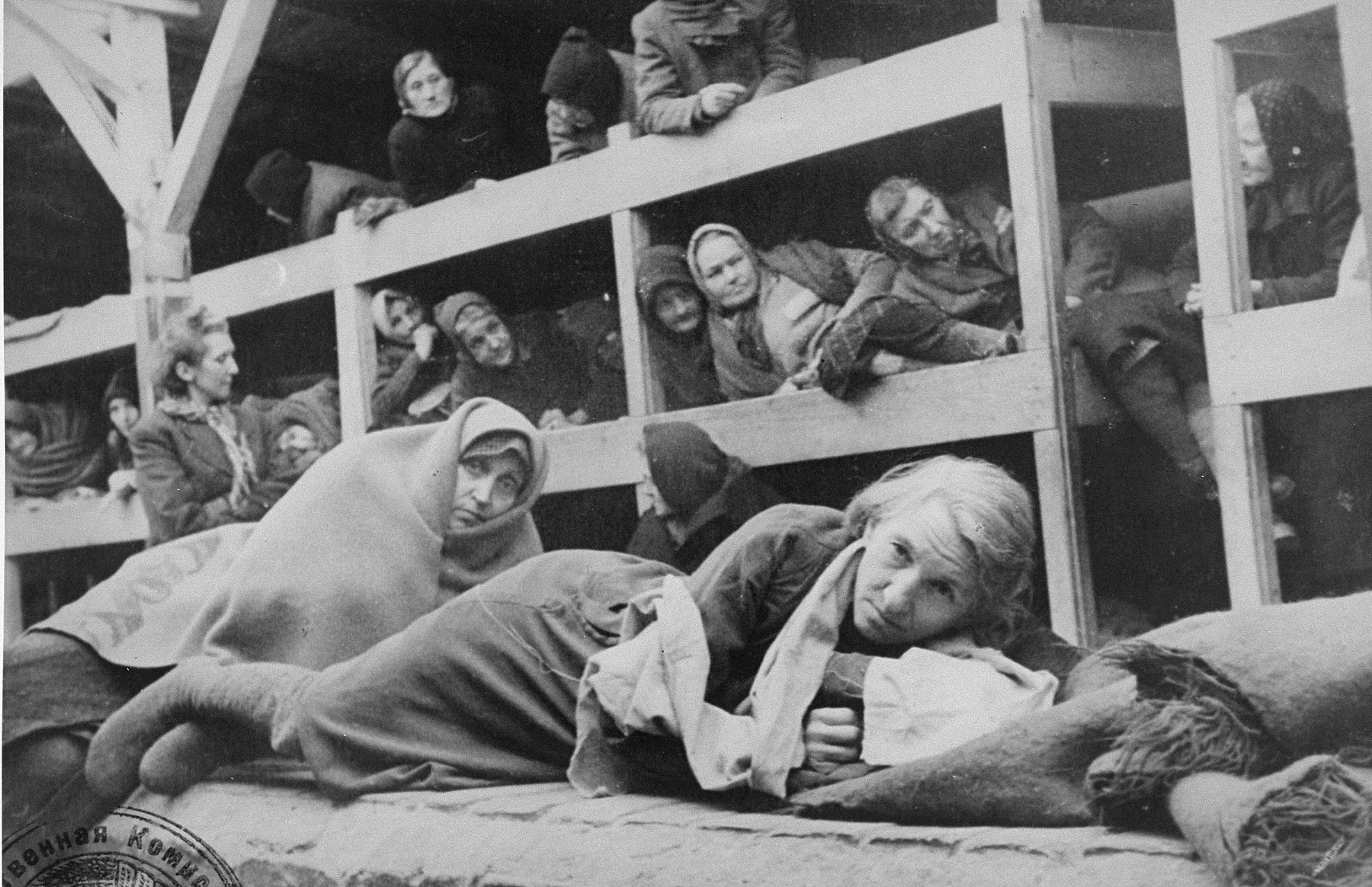
Women in the barracks of the newly liberated Auschwitz concentration camp, January 1945

Women in the barracks of Auschwitz shortly after Soviet forces liberated the camp on 27 January 1945. A still from Soviet liberation film, including Rivka Ruchle Chencinska among the survivors.

USHMM Photo Archives, photograph 14269.

The Holocaust murdered six million European Jews. The wider Nazi persecution took millions more: Roma and Sinti, Polish and other Slavic civilians, Soviet prisoners of war, the disabled killed under Aktion T4, political dissidents, religious resisters, gay men, Jehovah's Witnesses, the millions conscripted into forced and slave labor, and others the regime marked for erasure. The women among them left traces of their lives behind, and are waiting for their stories to be told.
Anne Frank

1929 to 1945

German-born Jewish diarist; killed at Bergen-Belsen.

Frank, her family, and four others hid for more than two years in a concealed annex in Amsterdam before their arrest in August 1944. She was deported to Auschwitz and then to Bergen-Belsen, where she died of typhus in February or March 1945. The diary she kept in hiding was saved by Miep Gies and survived her.

Hannah Szenes (Senesh)

1921 to 1944

Hungarian-born Jewish poet; British Army parachutist.

Szenes emigrated to Mandatory Palestine in 1939 and joined the British Special Operations Executive in 1943 as a Jewish parachutist volunteer. She parachuted into Yugoslavia in March 1944, was captured crossing into Hungary, refused under torture to give up her radio codes, and was executed by firing squad in Budapest on 7 November 1944.

Elisabeth Guttenberger

1926 to 2024

German Sinti Romani woman; Auschwitz survivor; postwar Romani rights advocate.

Guttenberger and her family were arrested in Munich on 8 March 1943 and deported to the Auschwitz-Birkenau Zigeunerlager ("Gypsy Family Camp") on 16 March. Most of her relatives were murdered in the camp. She survived deportation onward to Ravensbrück and Flossenbürg and was liberated in 1945. Her testimony about her family's fate was taken by Judge Heinz Düx at the Pforzheim District Court and read into the record of the 1965 Frankfurt Auschwitz Trial. She became a leading voice in German Sinti and Romani Holocaust commemoration.

Sister Maria Restituta Kafka

1894 to 1943

Austrian Catholic nun; Franciscan Sisters of Christian Charity; executed by the Nazi regime.

Born Helene Kafka in Brünn (Brno), she joined the Franciscan Sisters in 1914 and worked as a surgical nurse and anesthetist at the Mödling hospital near Vienna. After hanging crucifixes in the hospital's new wing in defiance of Nazi orders and duplicating and distributing an anti-Nazi text, she was arrested by the Gestapo on Ash Wednesday 1942 and sentenced to death by the People's Court. She was beheaded by guillotine on 30 March 1943, the only Catholic nun sentenced to death and executed by a Nazi court. Pope John Paul II beatified her in 1998.

Researched and written by · Fortitude Research

Work with Erin

Tell me who
you are looking for.

Start the search About Erin